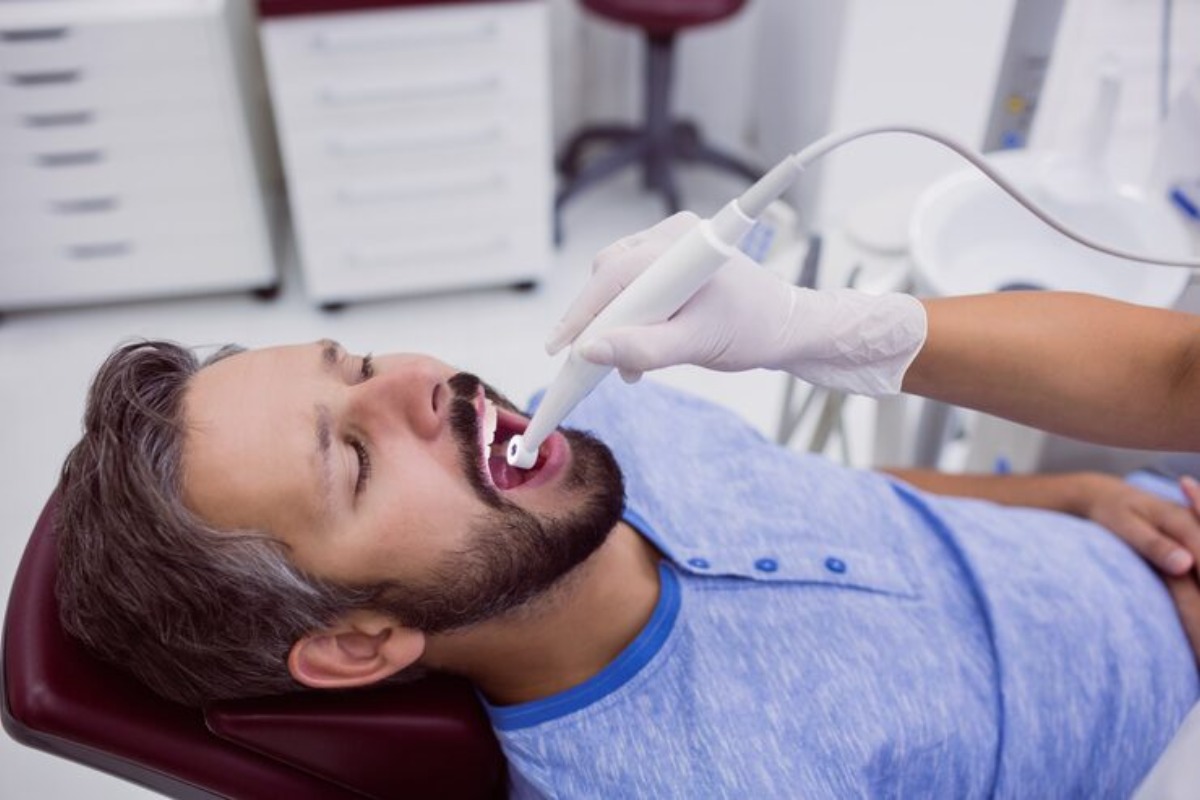
Could gum disease be developing without you noticing it? Gum disease often starts quietly and may not show clear signs in the early stages. Finding it early can help protect your teeth and gums from more serious problems. With the help of Intraoral Cameras in Los Angeles, dental professionals can get a closer view inside the mouth and spot areas of concern that may be difficult to see during a regular visual exam.
Many patients visit a periodontist in Los Angeles to understand the health of their gums better. Intraoral cameras provide detailed images that can support more accurate evaluations and help patients see what is happening inside their mouths.
What Is an Intraoral Camera?
An intraoral camera is a small device dentists use to capture clear images inside the mouth.
The camera can:
- Take close-up pictures of teeth and gums.
- Show the pictures on a screen.
- Help dentists see areas that are hard to see with a mirror.
- Keep a record of changes in the mouth over time.
Because the images are enlarged, small gum problems can be easier to notice.
Why Early Gum Disease Detection Matters
Gum disease can start without causing pain or noticeable symptoms.
Finding it early may help:
- Spot gum problems sooner
- Track changes in gum health
- Prevent more serious issues from developing.
- Help plan treatment at the right time.
When gum problems are found early, treatment is often easier and more effective.
How Do Intraoral Cameras Detect Gum Disease?
Intraoral cameras capture detailed images of the gums and surrounding areas of the mouth.
These pictures can help show:
- Redness along the gums
- Swollen or puffy gums
- Gums pulling away from the teeth.
- Plaque and tartar buildup
- Signs of gum irritation
The camera does not diagnose gum disease on its own, but it helps dentists get a clearer view of potential problems.
What Can Intraoral Cameras Show That Patients May Miss?
Many gum disease symptoms are difficult to notice at home.
An intraoral camera can help identify:
- Small areas of inflammation
- Early gum recession
- Bleeding-prone areas
- Changes around existing dental work
- Hidden plaque accumulation
The enlarged images help patients better understand their oral health.
How Intraoral Cameras Improve Patient Education
One of the biggest advantages of this technology is patient involvement.
When images appear on a screen, patients can:
- See problem areas directly.
- Understand treatment recommendations
- Follow changes over time.
- Ask informed questions
Visual information often makes dental discussions easier to understand.
Are Intraoral Cameras Better Than Traditional Dental Exams?
Intraoral cameras are helpful tools, but they do not replace a full dental exam.
They help by:
- Showing enlarged images of the teeth and gums
- Providing pictures that can be saved and compared over time
- Helping patients better understand their oral health
- Supporting a more detailed evaluation
A complete dental exam still includes a professional check-up and, when needed, other diagnostic tools.
Benefits of Intraoral Cameras for Gum Health
The use of intraoral cameras offers several advantages.
- Better Visibility: Small changes become easier to see through magnified images.
- Improved Documentation: Images can be stored and compared over time.
- Better Understanding: Patients can clearly see pictures of their gums and better understand their oral health.
- Earlier Detection: Possible gum problems may be found sooner.
- Greater Awareness: Patients often become more involved in their own dental care.
What Happens During an Intraoral Camera Examination?
The process is simple and comfortable.
During the examination:
- The camera is gently moved around the mouth.
- Images are displayed on a monitor.
- Areas of concern are reviewed.
- Findings are discussed.
- Recommendations are provided if needed.
The procedure typically takes only a few minutes.
When Should Someone Consider a Gum Health Evaluation?
A gum evaluation may be helpful when experiencing:
- Bleeding while brushing
- Persistent bad breath
- Swollen gums
- Gum recession
- Tooth sensitivity near the gumline
A periodontist near you may use advanced imaging tools to assess these concerns more closely.
How Technology Supports Better Gum Disease Monitoring
Gum health can change over time, so it is important to keep checking it regularly.
Intraoral cameras can help by:
- Checking how the gums are healing after treatment
- Comparing old and new pictures
- Looking for changes in the gums
- Supporting preventive dental care
These images help keep a clear record of your oral health over time.
A Clearer View of Your Gum Health!
Modern imaging technology provides a more detailed view of tooth and gum conditions, supporting early identification of potential concerns and ongoing oral health monitoring. Understanding what is happening below the surface can make treatment decisions easier and more informed. Schedule a consultation with Nima Ebrahimi, DDS, to learn more about advanced gum disease evaluation and care.
FAQs
How do intraoral cameras help find gum disease?
They take detailed pictures of the gums, making it easier to see signs such as redness, swelling, plaque buildup, and receding gums.
Are intraoral cameras better than regular dental exams?
Intraoral cameras help dentists see teeth and gums more clearly by showing enlarged pictures, but they do not replace a complete dental exam.
Are intraoral cameras safe?
Yes. Intraoral cameras are non-invasive and commonly used during routine dental examinations.
Can patients see the images during the exam?
Yes. Images are displayed on a screen so patients can view and discuss findings.